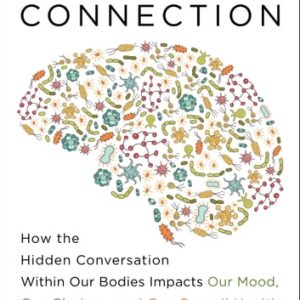

Description
The Mind-Gut Connection: How the Hidden Conversation Within Our Bodies Impacts Our Mood, Our Choices, and Our Overall Health
Emeran Mayer
Cutting-edge neuroscience combines with the latest discoveries on the human microbiome to inform this practical guide that proves once and for all the inextricable, biological link between mind and body.
We have all experienced the connection between our mind and our gut—the decision we made because it “felt right;” the butterflies in our stomach before a big meeting; the anxious stomach rumbling when we’re stressed out. While the dialogue between the gut and the brain has been recognized by ancient healing traditions, including Aryuvedic and Chinese medicine, Western medicine has failed to appreciate the complexity of how the brain, gut, and more recently, the microbiome—the microorganisms that live inside us—communicate with one another. In The Mind-Gut Connection, Dr. Emeran Mayer, Executive Director of the UCLA Center for Neurobiology of Stress, offers a revolutionary look at this developing science, teaching us how to harness the power of the mind-gut connection to take charge of our health.
The Mind-Gut Connection, shows how to keep the communication brain-gut communication clear and balanced to:
• Heal the gut by focusing on a plant-based diet
• Balance the microbiome by consuming fermented foods and probiotics, fasting, and cutting out sugar and processed foods
• Promote weight loss by detoxifying and creating a healthy digestion and maximum nutrient absorption
• Boost immunity and prevent the onset of neurological diseases such as Parkinson’s and Alzheimer’s
• Generate a happier mindset and reduce fatigue, moodiness, anxiety, and depression
• Prevent and heal GI disorders such as leaky gut syndrome; food sensitivities and allergies; and IBS; as well as digestive discomfort such as heartburn and bloating
• And much more.
The Origin of Chronic Inflammatory Systemic Diseases and their Sequelae
Rainer Straub
Chronic inflammatory diseases such as rheumatoid arthritis, ankylosing spondylitis, multiple sclerosis, inflammatory bowel diseases, and others typically stimulate a systemic response of the entire body. This response has a uniform character in many diseases because common pathways are switched on. The uniform response regulates systemic energy and water provision. However, long-term application of this program leads to typical disease sequelae such as fatigue / depressive symptoms, sleep disturbances, anorexia, malnutrition, muscle wasting – cachexia, cachectic obesity, insulin resistance, dyslipidemia, alterations of steroid hormone axes, disturbances of the hypothalamic-pituitary-gonadal axis, elevated sympathetic tone, hypertension, volume expansion, decreased parasympathetic tone, inflammation–related anemia, bone loss, hypercoagulability, circadian rhythms of symptoms, and disease exacerbation by stress .
The Origin of Chronic Inflammatory Systemic Diseases and Their Sequelae demonstrates concepts of neuroendocrine immunology, energy and water regulation, and evolutionary medicine in order to show that the uniform response that regulates systemic energy and water provision, has been positively selected for acute physiological responses and short-lived disease states, but is a misguided program in chronic inflammatory diseases and aging.